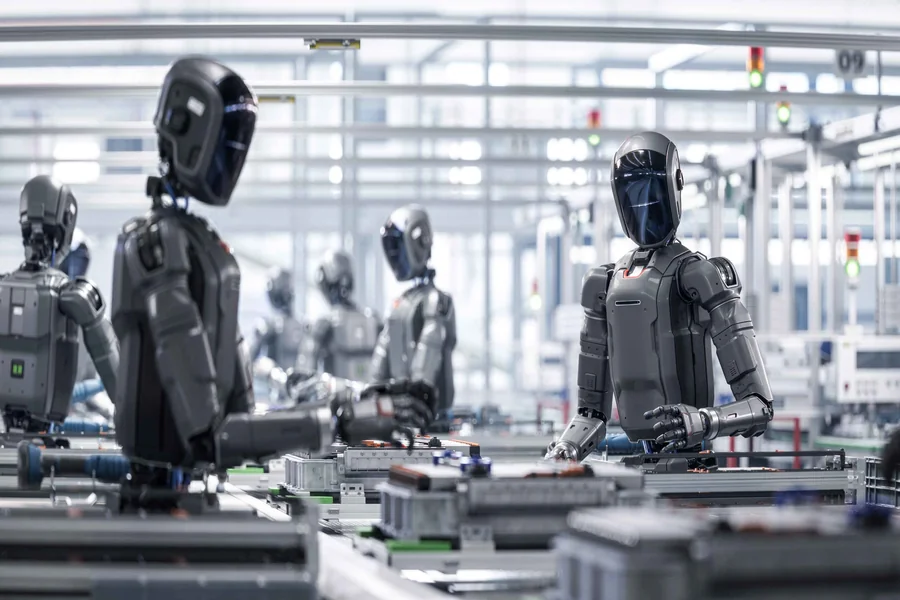
We stand on the brink of a massive technological shift, one that brings both anxiety and immense promise to the global workforce. For decades, science fiction literature and films have warned us about machines eventually taking over our livelihoods and rendering human labor obsolete. Yet, the reality unfolding before us is far more nuanced, fascinating, and highly optimistic. The Automation Paradox: Redefining Work in the Age of Robotics is not just a catchy phrase used by tech enthusiasts; it represents the current economic reality where artificial intelligence and physical machines are simultaneously eliminating repetitive tasks and creating entirely new categories of employment. Instead of leading to a jobless, dystopian future, this technological revolution is fundamentally reshaping what it means to be a valuable human worker. We are collectively shifting away from mundane, repetitive manual labor toward dynamic roles that require creativity, empathy, and high-level strategic thinking. As autonomous robots and intelligent software handle the heavy lifting—both physically on the factory floor and computationally in the data center—we are left with the unique opportunity to redefine our careers. This dynamic shift requires us to drastically rethink our innate skills, overhaul our traditional educational systems, and restructure our daily professional routines. By embracing these changes, we open the door to unprecedented innovation and human progress.
Understanding the Core of the Automation Paradox
The concept of a paradox in technology and economics is not entirely new, but it has never been as pronounced or as critical as it is today. When we talk about automation in the workplace, the immediate and understandable assumption is massive job loss. If a sophisticated robot can assemble a complex car engine, flip a burger with perfect consistency, or analyze a massive financial dataset faster and more accurately than a human being ever could, why would any profit-driven company continue to hire a person? This logical leap fuels the pervasive fear of mass unemployment. However, history and modern economic theories reveal a deeply counterintuitive truth. Whenever a specific task becomes automated, the cost of producing that good or providing that service drops significantly. This resulting drop in price almost always increases consumer demand, which in turn expands the entire industry. As the industry grows, it requires more human workers to manage the broader operations, handle customer relations, and oversee the automated systems. Think back to the widespread introduction of the automated teller machine, commonly known as the ATM, in the late twentieth century. When ATMs were first installed, bank tellers across the world were terrified that their jobs were completely obsolete. Instead, because it became significantly cheaper to operate a local bank branch without needing a massive staff just to handle cash withdrawals, banks opened many more branches. The total number of human bank tellers actually increased nationwide. However, their daily responsibilities shifted away from simply counting cash to building meaningful relationships with customers and selling complex financial products. The paradox is that by automating the most routine, mundane part of a job, the value of the unique human elements of that job skyrockets. In the modern context of advanced robotics, we see machines taking over hazardous, dull, or dirty work. This technological intervention does not erase the human worker; rather, it elevates them from a manual laborer to a machine operator, a process supervisor, or a quality assurance specialist. It changes the nature of the effort required, turning physical toil into intellectual management.
How Smart Machines Amplify Human Capabilities
Rather than viewing highly advanced robots and artificial intelligence systems as direct competitors for our livelihoods, it is far more accurate and productive to see them as powerful, tireless collaborators. The modern, cutting-edge workplace is increasingly defined by the seamless integration of human intelligence with machine efficiency. This incredible synergy is clearly visible in the manufacturing sector, where collaborative robots, commonly known in the industry as cobots, are specifically designed to work side-by-side with humans on the active factory floor. The mechanical cobot might safely lift heavy metal car parts into place without risking injury, while the human worker performs the delicate electrical wiring or nuanced quality checks that require a high degree of manual dexterity and subjective judgment. This powerful amplification of human potential extends far beyond the traditional factory floor. In the rapidly evolving healthcare sector, advanced surgical robots assist doctors by providing unparalleled precision and stability during complex, minimally invasive procedures. The sophisticated robot does not perform the surgery on its own; it absolutely requires the steady hand, deep medical knowledge, and real-time decision-making skills of a human surgeon to guide its every movement. As a result, patient outcomes improve drastically, recovery times shorten significantly, and the surgeon experiences far less physical fatigue during long operations. In the realm of white-collar knowledge work, software automation acts as an indispensable digital assistant. Artificial intelligence can sift through millions of complex legal documents in mere seconds to find a relevant case precedent, a task that would take human paralegals weeks of exhausting reading. By removing the tedious, soul-crushing burden of endless document review, legal professionals can spend their valuable time on higher-level strategy, compassionate client counseling, and persuasive courtroom advocacy. We are not being replaced by our mechanical creations; our reach is simply being exponentially extended. We are gaining digital superpowers that allow us to focus entirely on the elements of our work that are beautifully and uniquely human.
Essential Skills for the Future of Work
As routine, predictable tasks are rapidly handed over to our silicon counterparts, the fundamental skills that make us highly employable are shifting dramatically and permanently. The traditional days of earning a single college degree, learning a specific specialized trade, and coasting on that exact same knowledge for a forty-year career are definitively over. The new, undisputed currency in the modern job market is extreme adaptability. Because global technology evolves at a breakneck, unprecedented pace, the specific technical software or physical tools you master today might be completely obsolete in just five years. What will not become obsolete is your innate ability to learn new systems, unlearn outdated practices, and gracefully adapt to constantly changing professional environments. Emotional intelligence is another critical, non-negotiable asset that robots simply cannot replicate, no matter how advanced their programming becomes. While a machine can accurately diagnose a complex medical condition based on vast amounts of historical data, it cannot hold a terrified patient’s hand, show genuine empathy, and thoughtfully explain the rigorous treatment plan in a way that provides emotional comfort. In the competitive world of sales, a computer algorithm can generate endless leads and optimize pricing, but raw human intuition is required to build the deep trust necessary to close a complex, multi-million dollar deal. Roles that require deep human interaction, unfeigned compassion, and highly nuanced communication will unequivocally become the most highly valued and fiercely protected positions in the new global economy. Additionally, critical thinking and complex problem-solving are paramount for future success. Machines are exceptionally good at following rigid rules, identifying patterns in data, and executing clearly defined processes. However, they stumble heavily when faced with high ambiguity, complex ethical dilemmas, or entirely unprecedented challenges that lack historical data. Humans possess the unique, incredible ability to draw creative connections between completely disparate ideas, think entirely outside the box, and innovate on the fly. The ambitious workers who thrive in this thrilling new era will be the ones who can step back, look at the big picture, and ask the right philosophical and strategic questions, leaving the heavy computational answers entirely to the machines.
Navigating the Transition in the Workplace
While the long-term historical outlook is overwhelmingly positive and filled with opportunity, the current transitional period can be incredibly disruptive and highly stressful for many workers. Jobs are not just changing; entire industries are being rapidly uprooted and fundamentally redesigned. For the individual professional, successfully navigating this turbulent transition requires a fiercely proactive approach to lifelong learning and personal development. Waiting patiently for an employer to provide comprehensive training is no longer a safe or viable career strategy. Professionals must take absolute ownership of their own upskilling journey, actively seeking out new technical certifications, engaging online courses, and valuable industry mentorships that keep their skill sets sharp and relevant. Embracing a resilient growth mindset is essential for surviving and thriving. For corporate organizations, the ethical and financial responsibility is equally significant. Companies that simply deploy robots solely to aggressively cut headcount and save short-term costs will quickly find themselves outmaneuvered by visionary competitors who use automation to heavily empower their existing workforce. True, lasting leadership in this technological age involves heavily investing in human capital. This means actively and generously retraining loyal employees whose manual roles are being automated, and carefully transitioning them into new, higher-value positions within the growing company. It involves actively creating a positive corporate culture where new technology is correctly viewed as a powerful tool for employee empowerment rather than a terrifying threat to overall job security. Furthermore, global governments and public educational institutions have a massive, undeniable role to play in smoothing this societal transition. Our traditional school systems, many of which were originally designed during the rigid Industrial Revolution to produce highly compliant, repetitive factory workers, must be completely overhauled from the ground up. We urgently need to foster bold creativity, mental resilience, and deep digital literacy from a very young age to ensure the next generation is fully prepared to work hand-in-hand with artificial intelligence.
Final Thought
The collective journey into a highly automated, technology-driven future is not a dark path toward human obsolescence, but rather a brilliant invitation to elevate human potential to unprecedented heights. The initial fear of being entirely replaced by machines is a perfectly natural human reaction, but it unfortunately overlooks our incredible, proven capacity for adaptation, reinvention, and intellectual growth. By successfully automating the mundane aspects of our daily jobs, we ultimately free ourselves to passionately pursue the extraordinary. The automation paradox practically guarantees that as we gladly hand over our routine tasks to robots, the true market value of our human creativity, deep empathy, and strategic insight will reach heights never before seen in economic history. Embracing this monumental shift will require immense courage, relentless continuous education, and a fundamental, exciting reimagining of our daily work. Ultimately, the age of robotics is not about the triumph of cold machines; it is truly about the incredible liberation of the human worker.
FAQs
What exactly is the automation paradox? The automation paradox refers to the economic phenomenon where automating a specific task makes the remaining human elements of that job much more valuable and often leads to an overall increase in industry employment.
Will robots eventually take over all human jobs? No, while robots are excellent at handling highly repetitive and complex data-heavy tasks, they completely lack human empathy, raw creativity, and nuanced problem-solving abilities which are absolutely crucial for most roles.
How can I effectively protect my career from being completely automated? You can actively protect your career by continuously upskilling and heavily focusing on developing uniquely human traits like emotional intelligence, rapid adaptability, and high-level strategic thinking.
Are there specific global industries that will benefit the most from robotics? Industries such as modern healthcare, heavy manufacturing, and global logistics will see massive benefits through increased efficiency and safety, allowing human workers to completely focus on higher-level system oversight.
Does artificial intelligence and automation actually create new types of jobs? Yes, automation constantly creates highly specialized new roles in emerging fields like robot maintenance, artificial intelligence programming, and data ethics, opening up entirely new and lucrative career paths for adaptable workers.